Accurate estimating has always been the backbone of successful construction projects in the United States. In the commercial sector where budgets often run into millions of dollars and timelines are tightly controlled there is no room for guesswork. Every quantity takeoff, labor hour, subcontractor quote, and productivity assumption must be grounded in data and real-world expertise. As a U.S.-based cost estimating consultant with decades of experience in commercial construction, I’ve seen how detailed and reliable estimates can mean the difference between winning a competitive bid and suffering costly overruns.

Commercial projects—whether schools, hospitals, retail centers, or office buildings require advanced expertise, sophisticated tools, and proven workflows. That’s why professional Commercial Estimating Service providers play a critical role in helping contractors, developers, and project owners make financially sound decisions from the very start.
What Are Commercial Estimating Services?
Commercial Estimating Services involve the systematic preparation of detailed cost projections for large-scale building projects. Unlike smaller residential work, commercial estimating must address broader scopes, higher risks, and stricter compliance standards. This includes:
- Accurate Quantity Takeoffs – Calculating every cubic yard of concrete, ton of structural steel, and square foot of finishes.
- Labor & Material Cost Analysis – Factoring in union wages, local labor markets, and volatile material pricing.
- Subcontractor Bid Evaluation – Reviewing multiple trade quotes for fairness and completeness.
- Productivity & Waste Factors – Recognizing that real-world productivity rarely matches theoretical rates.
- Risk Management – Allowing for contingencies to cover design changes, market price swings, and schedule impacts.
At their core, commercial cost estimates ensure that contractors and project owners know exactly what to expect before committing resources.
Commercial vs. Residential Estimating
While residential estimating focuses on smaller scopes such as single-family homes or duplexes, commercial projects demand a different level of expertise. For example:
- Complexity of Trades: A home may involve basic carpentry and plumbing, but a hospital requires advanced mechanical, electrical, and plumbing (MEP) systems.
- Compliance Standards: Commercial buildings must meet strict U.S. building codes, ADA requirements, and often LEED or sustainability standards.
- Risk Factors: Weather delays, steel price fluctuations, and union labor strikes have a far greater impact on multimillion-dollar commercial projects than on residential builds.
This difference is why specialized Commercial Construction Estimating Services are essential. Without them, even experienced contractors risk mispricing bids or underestimating scope.
Workflows Across CSI Divisions
Professional estimators cover the full CSI Division 01–34 scope. For commercial projects, this means:
- Concrete & Masonry – Foundations, structural slabs, tilt-up walls, and blockwork.
- Structural Steel – Framing systems, decking, and welding labor.
- Carpentry & Finishes – Drywall, flooring, ceilings, and millwork.
- Mechanical, Electrical & Plumbing (MEP) – HVAC ductwork, switchgear, fire suppression, and plumbing risers.
- Sitework & Civil – Excavation, grading, paving, and utilities.
Every division requires precise material takeoff for commercial buildings, labor-hour projections, and subcontractor coordination. Inaccurate assumptions in even one trade can derail the entire budget.
Tools and Methods: Manual vs. Software-Based Estimating
For decades, estimators relied on manual takeoffs using scale rulers and spreadsheets. While these methods provided a foundation, they often lacked the speed and precision required for today’s competitive U.S. market.
Modern commercial estimating now leverages advanced software, including:
- PlanSwift – Fast digital quantity takeoffs directly from PDFs.
- Bluebeam Revu – Real-time markups, collaboration, and measurement tools.
- RSMeans – Reliable cost data updated for U.S. labor and material rates.
- Xactimate – Widely used for insurance-related estimating in commercial renovations.
- Sage Estimating – Enterprise-level integration with accounting and project management.
- BIM Models (Level 0–3) – Offering 3D/4D/5D cost visualization for clash detection and scenario planning.
Comparing manual vs software commercial estimating, digital tools reduce human error, improve speed, and allow for detailed “what-if” analysis. For instance, on a U.S. healthcare facility project I worked on, BIM-driven estimates flagged a major MEP conflict early, saving both cost and schedule delays.
Real-World Applications in the U.S. Projects
To understand the value of Commercial Estimating Services USA, consider these examples:
- Healthcare Facility – For a hospital expansion in Ohio, precise MEP takeoffs ensured accurate budgeting for complex HVAC and medical gas systems.
- K–12 Schools – Districts in Texas used detailed estimates to align bond funding with realistic construction costs, avoiding mid-project shortfalls.
- Retail Centers – On a California shopping complex, waste factors for finishes were accounted for, reducing unexpected material overruns.
- Government Facilities – Federal buildings require detailed CSI Division compliance, where estimates must pass strict review before funding is released.
In each case, accurate estimating directly improved bid competitiveness, budgeting accuracy, and timely project delivery.
Risks and Contingency Planning
Commercial projects face unique risks:
- Design Changes – Owner revisions can shift scope significantly.
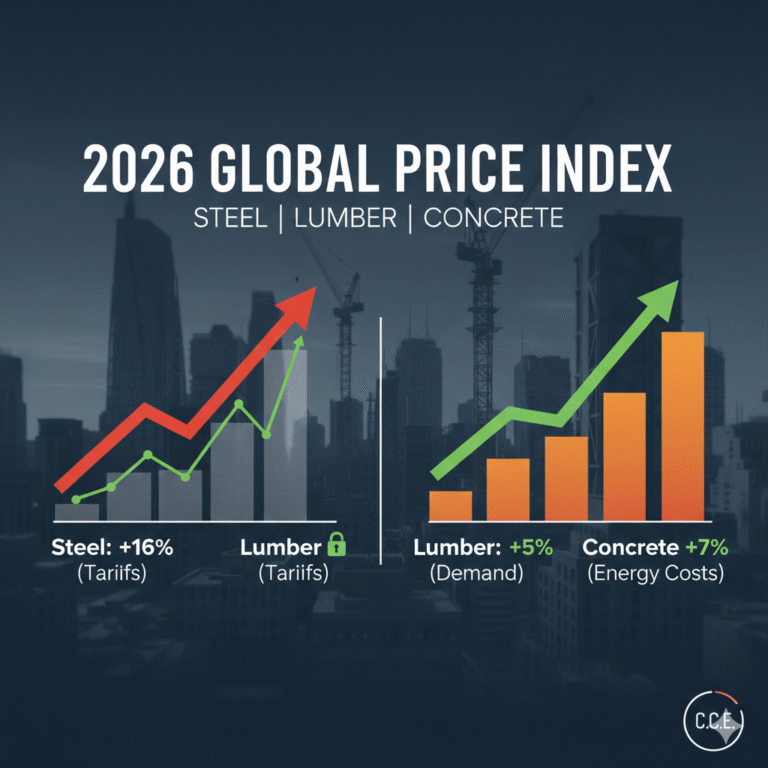
- Market Price Fluctuations – Steel and lumber markets in the U.S. are especially volatile.
- Weather Impacts – Extreme cold or hurricanes can stall projects for weeks.
That’s why seasoned estimators always include contingency allowances. A 5–10% contingency can protect contractors and owners from unexpected costs, keeping projects financially viable.
Why Work with the U.S.-Based Estimator?
Choosing a U.S.-based estimating consultant ensures that cost data, labor rates, and building codes align with actual project conditions. Offshore or generalized estimating often misses critical factors like:
- Union vs. non-union labor rates
- Regional material price differences
- U.S. code and compliance standards
By working with a domestic expert, project owners benefit from accurate, location-specific insights that directly improve financial planning.
Our Value Proposition
At Construction Estimating Services, we provide:
- Full CSI Division 01–34 Coverage
- Precise Commercial Takeoff Services for all major trades
- Advanced Digital Workflows using PlanSwift, Bluebeam, RSMeans, Sage, and BIM
- U.S.-Based Expertise built on years of direct project experience
We also support cross-sector estimating. For developers working on mixed-use projects, our Industrial Estimating Services extend the same precision to factories, warehouses, and plants.
Conclusion
Commercial projects in the United States demand more than rough numbers—they require accurate, detailed, and expert-driven cost planning. From office towers to healthcare facilities, every successful build starts with reliable estimating. By leveraging professional Commercial Cost Estimation Services, contractors and project owners gain control over budgets, reduce risk, and improve bid competitiveness.
If you’re planning a project, partnering with a trusted U.S.-based estimator can ensure every square foot, labor hour, and subcontractor scope is accounted for. That’s the foundation of project success—and exactly what our team delivers.
FAQs on Commercial Estimating Services
1. What are Commercial Estimating Services?
Commercial Estimating Services provide detailed cost projections for large-scale projects such as schools, hospitals, retail centers, and office buildings. They cover quantity takeoffs, labor and material costs, subcontractor bids, and risk allowances to help owners and contractors plan accurately.
2. How do Commercial Estimating Services differ from Residential Estimating?
Residential estimating focuses on smaller scopes like single-family homes, while commercial estimating involves complex trades, strict building codes, and higher financial risks. Commercial projects demand advanced expertise, software tools, and comprehensive CSI Division coverage.
3. Which software tools are most commonly used in commercial estimating?
Professional estimators often use PlanSwift, Bluebeam Revu, RSMeans, Sage Estimating, Xactimate, and BIM models. These tools improve accuracy, speed, and collaboration compared to manual estimating methods.
4. Why is contingency planning important in commercial estimating?
Commercial projects face risks such as design changes, labor shortages, weather delays, and material price fluctuations. Including a 5–10% contingency in estimates helps protect budgets and ensures financial stability.5. Why should I choose a U.S.-based commercial estimator?
U.S.-based estimators provide accurate insights into local labor rates, regional material costs, and national building codes. This ensures estimates are realistic and tailored to actual project conditions, reducing costly surprises.