In the construction industry, your financial success is only as good as the data driving your bids. As we navigate 2026, the complexity of global supply chains and labor markets in the USA, UK, and Canada has made precision a survival requirement. Choosing the wrong partner for your construction cost estimating needs can lead to more than just a lost bid; it can result in a contract that drains your company’s resources.
Vetting an estimating firm requires looking past polished websites and low service fees. You need a partner that understands the grit of the job site and the technical rigor of modern quantity surveying. To protect your margins, you must be able to spot the subtle indicators of a firm that prioritizes speed over accuracy.
1. Lack of Regional Market Intelligence
Construction is a local business. A firm that claims to provide accurate figures for a project in London using the same logic as a project in Dallas is a major liability. Local labor laws, union versus non-union rates, and specific provincial or state taxes can shift a budget by 15% or more.
If an estimator cannot discuss the specific challenges of your region—such as the availability of skilled trades in Ontario or the current lead times for structural steel in the Pacific Northwest—their data is likely generic. Genuine [suspicious link removed] requires localized knowledge to be effective.
2. Refusal to Share Software and Methodology
The days of the “black box” estimate are over. Professional firms in 2026 use industry-standard tools like Xactimate, Bluebeam, or PlanSwift and are proud to show their work. If a firm is vague about how they arrive at their numbers or what software they use for digital takeoffs, it suggests a lack of technical depth.
A reliable partner provides a clear audit trail. You should be able to see exactly how quantities were measured and what price databases were referenced. Transparency in methodology is the only way to verify that your bid is grounded in reality rather than guesswork.
3. Quoting Unrealistically Fast Turnaround Times
Precision takes time. While digital tools have sped up the process, a complex commercial or industrial estimate still requires hours of meticulous review. A firm promising a 24-hour turnaround on a multi-million dollar project is likely skipping the most important step: the technical peer review.
Fast, cheap estimates usually rely on “square foot” averages rather than detailed quantity takeoffs. These averages rarely account for the specific complexities of your blueprints, such as unique architectural features or difficult MEP configurations. Speed should never come at the expense of the 98% accuracy required to stay profitable.
4. Absence of Detailed Technical Assumptions
No set of blueprints is perfect. There are always gaps, contradictions, or missing specifications. A red flag is an estimating firm that returns a price without a list of “Assumptions and Clarifications.” This document is vital because it tells you exactly what is included in the price and what is not.
Without clearly stated assumptions, you are flying blind during the tender process. Professional firms highlight these gaps early, as outlined in The Definitive Guide to Construction Cost Estimating in 2026, to ensure the contractor can communicate risks to the client before the contract is signed.
| Red Flag | Potential Consequence | Professional Standard |
| No Assumptions List | Uncovered costs and change order disputes. | Detailed list of exclusions and clarifications. |
| Generic Pricing | Bidding too high or losing money on the job. | Localized labor and material rate research. |
| No Tech Stack | Manual errors and lack of auditability. | Use of verified digital takeoff platforms. |
5. Inexperience with Specialized Trades (MEP)
Mechanical, Electrical, and Plumbing (MEP) systems often represent the largest portion of a modern building’s budget. Many general estimating firms treat these as “plug-in” numbers based on historical averages. This is a dangerous shortcut because MEP is where the most significant cost overruns occur.
If your estimator doesn’t have a specialist who understands electrical circuitry or HVAC ducting layouts, they will miss the “hidden” components like hangers, fittings, and specialized controls. A firm must demonstrate a deep understanding of trade-specific requirements to provide a truly comprehensive bid.
6. Poor Communication and Defensive Posture
A cost planning firm should function as an extension of your own team. If they are difficult to reach or become defensive when you ask for clarification on a specific line item, the relationship is bound to fail. Estimating is a collaborative process that requires back-and-forth dialogue to capture the project’s true intent.
Vetting an estimator includes testing their responsiveness. Professional firms welcome your questions because they understand that their data will be used to make high-stakes business decisions. If they aren’t willing to walk you through the logic of their estimate, they don’t value your company’s financial safety.
7. Pricing Based Solely on Database Averages
While databases like RSMeans are essential tools, they are just a starting point. A major red flag is an estimator who relies solely on these numbers without verifying them against real-world quotes from suppliers and subcontractors. In 2026, market volatility can make last month’s database price obsolete today.
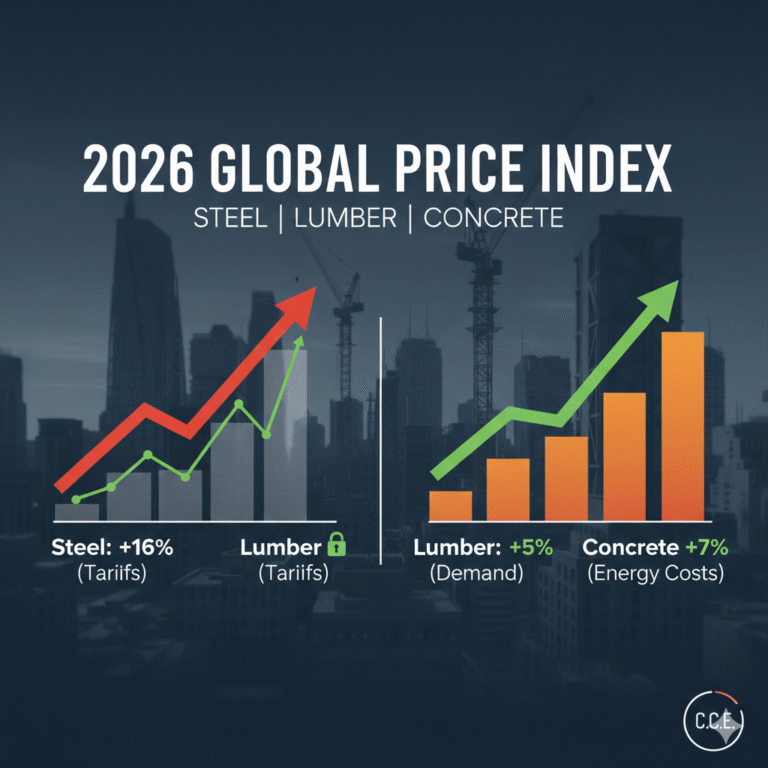
An expert estimator picks up the phone. They verify the current price of lumber or concrete in your specific city and check the lead times for specialized equipment. Relying purely on software-generated averages is a sign of a “data entry” firm, not a professional construction cost estimating partner.
Frequently Asked Questions
Why is regional knowledge so important for an estimator?
Labor rates and material availability vary wildly by city. A firm without regional knowledge will use averages that might be 20% off from the actual costs in your specific zip code or province.
What software should a professional estimating firm use?
Look for firms using established platforms like Bluebeam, PlanSwift, or Xactimate. These tools provide digital audit trails that allow you to verify every measurement they make.
How can I tell if an estimate is too good to be true?
Compare it to your own historical data or get a second opinion. If the quantities seem low or the waste factors are missing, the firm is likely cutting corners to give you a “low” number that won’t hold up on-site.
Should an estimator help with value engineering?
Yes. A high-quality firm won’t just tell you the cost; they will suggest alternative materials or methods that can save money without sacrificing the quality of the project.
What is the risk of using an estimator who skips MEP details?
MEP systems are complex. If an estimator uses a “per square foot” price for electrical, they might miss thousands of dollars in specialized panels or complex wiring requirements, leading to massive losses.
How often should an estimating firm update their price data?
In the current 2026 economy, material prices should be verified for every specific bid. While they use databases for general reference, the final bid should reflect real-time quotes from local suppliers.