In the past, construction and architectural projects in the United States relied heavily on hand-drawn sketches and physical models to convey design intent. While these methods had their place in history, they often led to misunderstandings, cost overruns, and delays. The evolution of computer-aided design (CAD) and digital visualization transformed this process, giving birth to 2D drafting and 3D rendering services that revolutionized how projects are planned, presented, and approved.
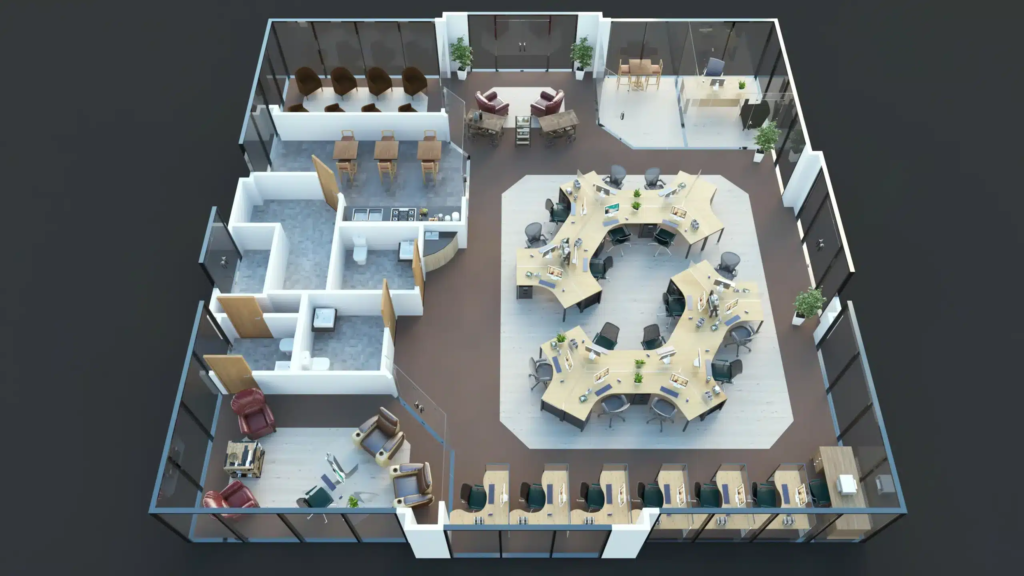
Today, accurate renderings are not just about visualization, they are an essential service for developers, contractors, architects, and project owners who need clarity, precision, and confidence before investing in construction. That is exactly why firms offering expert-level visualization are often closely connected with Construction Estimating Services because both accuracy in visuals and accuracy in costs are fundamental to project success.
Why 2D/3D Rendering Services Matter in Modern Construction
At its core, 2D/3D Rendering Services bridge the gap between design imagination and construction reality. A 2D draft provides technical clarity for engineers and contractors, while 3D visualization helps owners and stakeholders see exactly what the finished space will look like—whether it’s a healthcare facility, office building, retail center, or high-rise apartment complex. In my decades of experience as a cost estimating consultant working across U.S. commercial and residential projects, I have seen renderings directly influence client decisions, secure faster approvals from planning boards, and reduce costly design changes during construction.
Unlike residential drawings, which may focus on smaller scale interiors, commercial and institutional projects demand higher levels of accuracy. For example, a school or hospital project in the U.S. involves multiple stakeholders—from architects and engineers to government reviewers—each requiring detailed renderings and layered information. That’s where professional rendering services ensure design alignment before a single brick is laid.
The Workflow of 2D and 3D Rendering
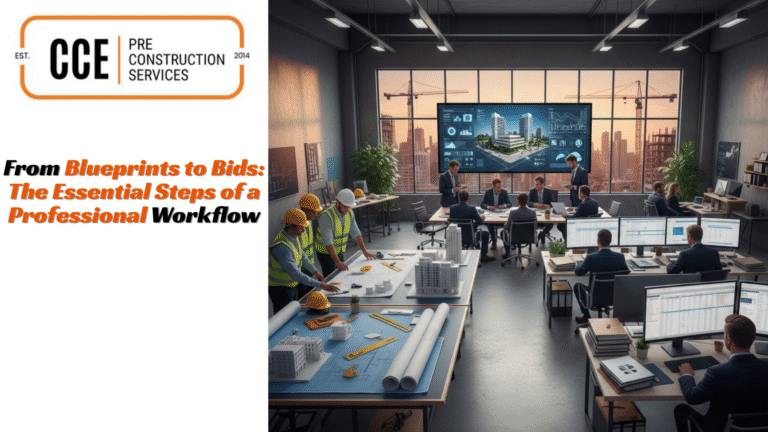
Professional rendering is not simply about producing a “pretty picture.” It is a detailed workflow that requires technical expertise, artistic skill, and software mastery. The process typically begins with 2D CAD drawings, which establish the structural framework. From there, estimators and rendering specialists develop 3D models using platforms like Autodesk Revit or SketchUp. These models are enhanced with textures, lighting, and realistic finishes using tools such as 3ds Max, V-Ray, Lumion, or Enscape.
A well-executed rendering includes accurate measurements, material specifications, and realistic lighting conditions. For example, in one office building project in New York, we created 3D walkthroughs to demonstrate how natural daylight would impact energy efficiency throughout the year. This visualization not only impressed stakeholders but also influenced material selection and cost estimates.
Software and Technology in U.S. Rendering Workflows
Technology has transformed how renderings are delivered. While manual sketches once dominated, today’s U.S.-based professionals rely on advanced software to achieve precision and speed. AutoCAD remains the backbone for 2D drafting, while Revit enables Building Information Modeling (BIM) at levels 1–3. For lifelike visualizations, rendering engines like Lumion, Enscape, and V-Ray bring projects to life with photorealistic textures and virtual walkthroughs.
For developers, this software-driven approach reduces risk by detecting clashes early—such as conflicts between HVAC systems and structural elements—long before construction begins. This aligns perfectly with cost estimation workflows, where detecting errors in the preconstruction phase saves both time and money.
2D vs. 3D Rendering: Key Differences
While both 2D and 3D rendering serve critical roles, their applications differ.
- 2D Renderings/Drafts are essential for technical communication, construction documents, and permitting. They ensure compliance with U.S. building codes and provide precise layouts for contractors.
- 3D Renderings go a step further, offering immersive visualizations that make it easier for non-technical stakeholders to understand the project. For instance, a retail developer in Chicago used 3D visualizations to pre-sell leasing spaces before construction was even complete.
Together, these services empower decision-making, improve collaboration, and minimize costly surprises.
Integration with Drafting and Estimating Services
One of the unique advantages of working with a full-service firm is the integration of visualization, drafting, and estimating. Accurate renderings often rely on high-quality blueprints, which is why many clients also benefit from Plans/Blueprints Drafting Services alongside rendering. This creates a streamlined workflow—from blueprint creation to 3D visualization and final cost estimation—ensuring consistency across the entire preconstruction process.
By combining these services, clients gain confidence that every line, material, and dimension in the rendering corresponds with accurate cost data and construction feasibility.
Real-World Applications Across U.S. Projects
The value of professional rendering services can be seen across multiple sectors:
- Healthcare: Hospitals require precise 3D visualizations to ensure layouts meet regulatory standards and patient flow needs.
- Education: School districts often rely on 3D walkthroughs to gain public approval and secure funding.
- Commercial: Developers of malls, office towers, and mixed-use facilities use renderings to attract tenants and investors early in the process.
- Residential: High-rise apartment projects in cities like Los Angeles and Miami use 3D visualization to pre-sell units and guide interior selections.
In each case, accurate renderings reduce risk, enhance collaboration, and lead to smoother project delivery.
Brand Value Proposition
What sets our services apart is our comprehensive coverage of CSI Divisions 01–34, ensuring that every aspect of the design and construction process is accurately represented. Our U.S.-based rendering experts bring not only technical skill but also real-world construction knowledge, which means every rendering is more than an image—it’s a reliable foundation for decision-making. By integrating modern software with decades of industry experience, we provide clarity, precision, and confidence for every client.
FAQs on 2D/3D Rendering Services
1. What is the difference between 2D drafting and 3D rendering?
2D drafting focuses on technical construction drawings, while 3D rendering creates lifelike visualizations for client presentations and decision-making.
2. How do 2D/3D rendering services help reduce construction costs?
By identifying design issues early, visualizations prevent costly changes during construction and help align budgets with realistic expectations.
3. Which software is commonly used in U.S. rendering projects?
Professionals rely on AutoCAD, Revit, 3ds Max, Lumion, SketchUp, V-Ray, and Enscape for accurate drafting and photorealistic rendering.
4. Can rendering services be integrated with estimating?
Yes. When combined with cost estimating, renderings ensure that every visual detail is backed by accurate material takeoffs and cost data.
5. Who benefits most from 2D/3D rendering services?
Architects, contractors, developers, real estate professionals, and project owners who need clarity, approvals, or marketing tools benefit significantly.