Starting a construction project without a detailed cost breakdown is like sailing a ship without a compass. In the current 2026 market, where material volatility and labor shortages are global realities, a “rough guess” is a recipe for financial disaster. Whether you are developing a commercial hub in Toronto or a residential block in London, you need to understand exactly what goes into a professional budget.
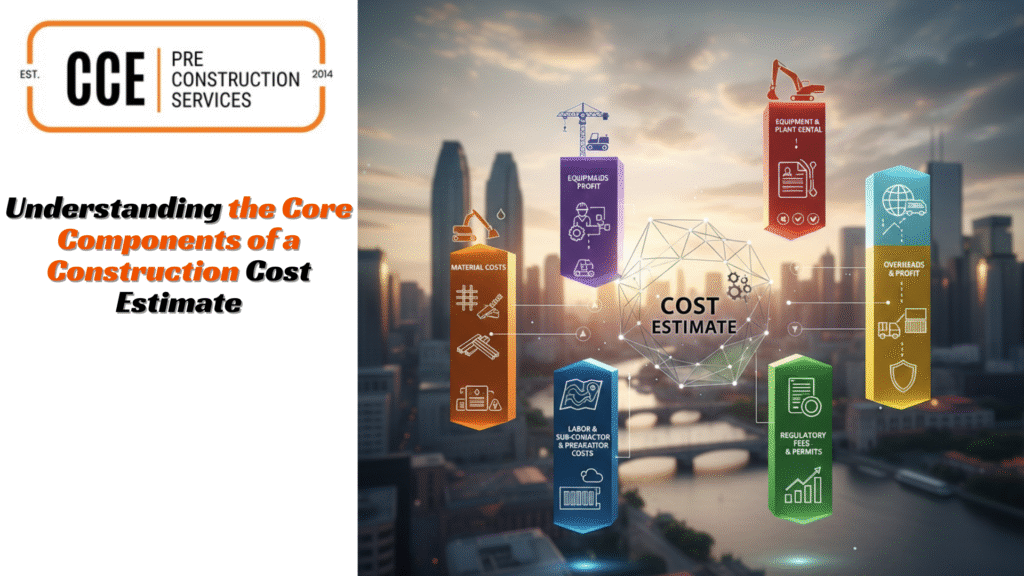
The successful Construction Cost Estimating (C.C.E) process identifies every variable that could impact the bottom line. It moves beyond simple material pricing to account for site-specific risks, regulatory fees, and the intricate logistics of modern construction. By deconstructing an estimate into its core pillars, contractors can submit bids that are both competitive and protective of their profit margins.
The Foundation of Direct Costs: Labor and Materials
Direct costs are the most visible parts of any estimate. These are the expenses directly tied to the physical build, such as the concrete for the foundation or the hours spent by a master electrician on-site. In the USA and Canada, tracking these costs requires constant attention to local market fluctuations.
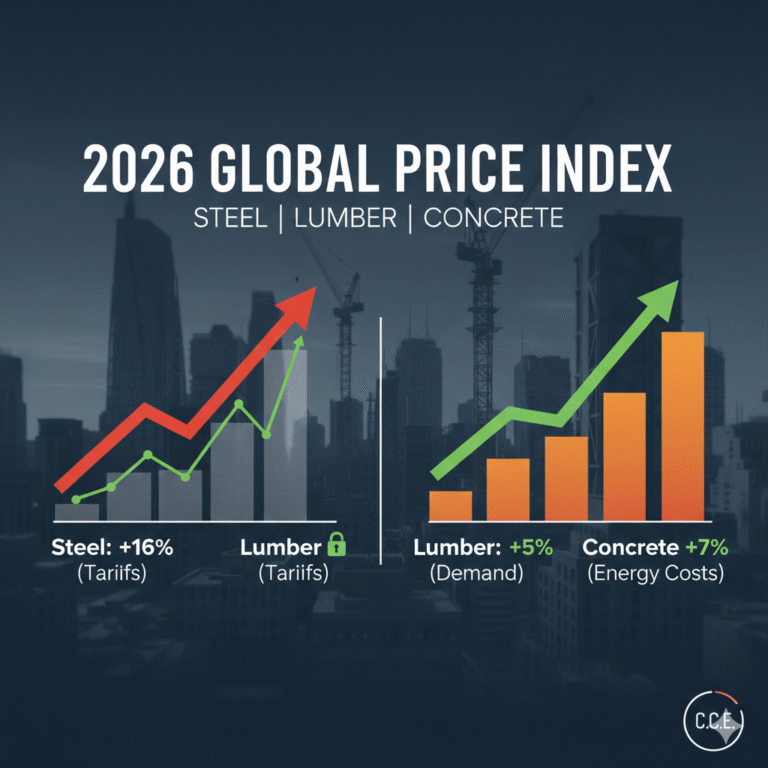
Labor costs in 2026 are not just about hourly wages. An accurate estimate must factor in the “burdened” labor rate, which includes insurance, workers’ compensation, and payroll taxes. Material costs are equally complex, as supply chain shifts can cause prices for structural steel or timber to change between the time of the bid and the date of procurement.
| Direct Cost Component | Key Considerations | Risk Level |
| Raw Materials | Current market index, bulk discounts, and delivery fees. | High |
| Labor Force | Specialized trade rates, overtime, and local labor laws. | Medium |
| Equipment | Rental durations, fuel consumption, and maintenance. | Low |
Indirect Costs and Project Overheads
If direct costs build the structure, indirect costs keep the project running. These are the expenses that are necessary for the job but aren’t permanently part of the building. Examples include site office rentals, temporary utilities, permits, and professional project management fees.
Many contractors fail because they under-allocate for overheads. In the UK market, specifically under NRM standards, these are often categorized as “preliminaries.” Failing to account for the cost of site security or the temporary fencing required by local municipalities can quickly erode the projected profit of a project.
The Science of Quantity Takeoffs
The quantity takeoff is the process of measuring every single item shown on a set of blueprints. It is the most time-consuming part of the estimating process but also the most critical for accuracy. Modern estimators use digital tools to pull exact measurements from PDF or CAD files to ensure nothing is missed.

Accuracy in takeoffs prevents the two biggest killers of construction firms: under-ordering and over-ordering. Over-ordering ties up capital in wasted materials, while under-ordering causes site delays that lead to liquidated damages. A professional takeoff provides the raw data that feeds into The Definitive Guide to Construction Cost Estimating in 2026 as a baseline for all further calculations.
Equipment and Logistics Expenses
The machinery required to move dirt, lift steel, or pour concrete represents a significant portion of the budget. An estimator must decide whether it is more cost-effective to buy equipment for a long-term project or rent it for specific phases. This decision impacts the cash flow of the entire operation.
Logistics also play a major role, especially in dense urban environments like New York or London. The cost of “last-mile” delivery, crane permits, and traffic management can be substantial. If your estimate doesn’t include the price of a flagger or a specialized transport permit, your bid is already inaccurate before the first shovel hits the ground.
How do site conditions impact equipment costs?
Site access is a major variable. A project on a flat, open field requires different machinery and less time than a project on a steep hillside or a narrow city lot. Poor soil quality might also require specialized shoring or piling equipment that wasn’t immediately obvious from the initial drawings.
Risk Assessment and Contingency Planning
No construction project goes exactly according to plan. Weather delays, hidden underground obstacles, or sudden price spikes are part of the business. A professional estimate always includes a contingency fund typically between 5% and 15% to act as a financial shock absorber.

Contingency is not “free money” or extra profit; it is a calculated risk management tool. In the current economic climate of 2026, estimators are using more sophisticated risk modeling to determine the appropriate contingency based on the project’s complexity and the historical reliability of the subcontractors involved.
| Risk Category | Example Event | Suggested Contingency |
| Low Complexity | Standard residential build with clear soil reports. | 5% – 7% |
| Medium Complexity | Commercial renovation with potential structural unknowns. | 8% – 12% |
| High Complexity | Specialized industrial sites or high-rise urban infill. | 15%+ |
Profit Margins and Markup Strategies
After all costs are calculated, the final component is the markup. This is the amount added to cover the company’s home-office overheads and the actual profit for the business. Setting the right markup is a balancing act: too high, and you lose the bid; too low, and you risk the company’s future.
A smart markup strategy considers the “value” of the project rather than just a flat percentage. If a project requires high technical expertise or has a very tight deadline, the markup should reflect the increased pressure on the firm’s resources. Strategic estimators analyze the competition and the client’s budget to find the “sweet spot” that wins the work while ensuring sustainability.
Frequently Asked Questions
What is the difference between direct and indirect costs?
Direct costs are physical items like wood and labor hours directly on the building. Indirect costs are support items like site trailers, insurance, and building permits that are necessary but not part of the final structure.
Why is a quantity takeoff so important?
It provides the exact count of materials needed. Without an accurate takeoff, the entire estimate is based on guesswork, which leads to either losing the bid or losing money during the build.
How much contingency should I add to a bid?
The standard is usually 10%, but this varies. A simple project might only need 5%, while a complex renovation with many unknowns might require 15% to 20% to stay safe.
Do estimators factor in inflation for 2026?
Yes, especially for multi-year projects. In 2026, estimators use escalation clauses or price indexes to ensure that a quote given today will still be valid when materials are purchased six months from now.
What software is used for construction estimating?
Common tools include Xactimate for restoration, PlanSwift or Bluebeam for digital takeoffs, and specialized databases like RSMeans for localized pricing in the USA and Canada.
Can a subcontractor provide their own estimate?
Yes, and they usually do. A general contractor’s job is to review those subcontractor quotes to ensure they are complete and align with the overall project specifications.