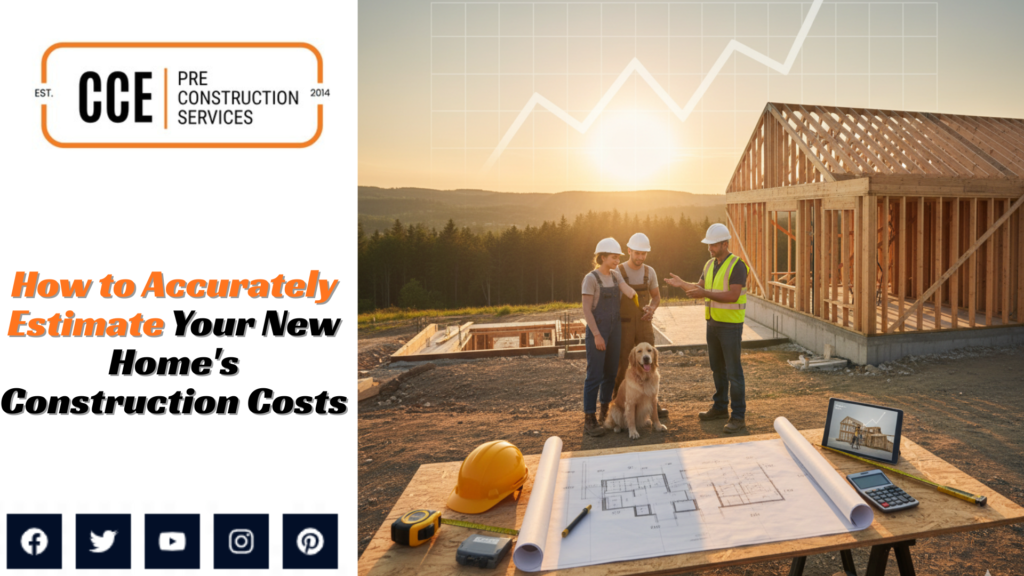
How to Accurately Estimate Your New Home’s Construction Costs

Building a new home is one of life’s biggest milestones. But before you start laying bricks or picking paint colors, there’s one essential step you can’t skip understanding your home’s construction costs. Accurately estimating these costs can save you from financial stress, project delays, and unexpected expenses later.
A Short Journey From Caves To Modern Homes

Centuries ago, humans lived in caves, tents, and wooden huts basic shelters that offered protection but little comfort. As civilization advanced, so did our concept of “home.” From ancient brick houses to today’s smart homes, our construction methods evolved, bringing new materials, styles, and technologies.

However, one thing has always remained constant: the need to plan and estimate costs before building. In earlier times, people relied on rough guesses and experience, but today, advanced tools like the home cost estimator and construction cost estimation services have made it easier than ever to calculate costs accurately.

Why Accurate Estimation Matters More Than Ever

When you’re planning a new home whether it’s a cozy apartment in London, a family house in Texas, or a modern villa in Toronto an accurate estimate helps you make smart financial decisions. Even a small miscalculation in materials or labor can increase your total budget by thousands.

That’s why professional companies like Construction Cost Estimation Service (C.C.E) help homeowners predict every detail of their project from flooring to roofing using advanced software and real-time data.To learn more about how expert estimators prepare precise project budgets, visit construction estimating.
 

Breaking Down Your Home Construction Costs

When estimating the total cost of your new home, it’s helpful to divide the project into key areas. Each section has its own materials, labor, and price range.

1. Foundation and Masonry Work

This is the base of your home. Costs here depend on soil type, design, and materials used. Masonry includes walls, cement work, and structural components often calculated using a house construction cost estimator. Getting this part right ensures stability and safety for decades.

2. Roofing and Structure

The roof not only protects your home from weather but also adds style and insulation. Whether you choose shingles, tiles, or metal roofing, a home building cost estimator can help you compare options and calculate long-term value.

3. Flooring: Beauty Meets Function

Flooring is one of the most important elements of home design. It affects comfort, aesthetics, and resale value. The cost varies depending on material — tiles, laminate, hardwood, or carpet.
Tools like a flooring cost estimator or estimator flooring cost calculator make it easy to plan your budget.

For a detailed guide, check out Flooring Estimating Services, a professional solution for accurate takeoffs and pricing.

4. Electrical and Plumbing Systems

Electrical wiring and plumbing installation are the veins and arteries of your home. A home improvement cost estimator includes the cost of lights, switches, water lines, and fixtures. Poor estimation here can cause major issues later, so precision is key.

5. Painting and Finishing

A fresh coat of paint can transform your space, but estimating paint cost can be tricky. A home renovation cost estimator or exterior house painting cost estimator helps determine how much paint and labor are needed — avoiding overspending on materials.

6. MEP (Mechanical, Electrical, and Plumbing) Integration

For larger or modern homes, MEP services ensure your building systems function efficiently. Professionals combine construction cost estimation services with digital design models to estimate mechanical ventilation, HVAC systems, and energy costs.

What Makes Professional Estimating Services Valuable

Hiring a professional estimator doesn’t just save time — it saves money. They bring years of experience, understand market trends, and use specialized tools like home cost estimator service software. With accurate data, they prevent material waste, unnecessary delays, and financial surprises.

If you’re planning a new home or renovation, explore the benefits of working with experts through
Construction Estimating Service and Residential Estimating Services.

For commercial projects, you can also review Commercial Building Cost Estimator, a related guide to accurate construction planning.

How to Estimate New Home Construction Costs

To estimate your home’s cost accurately, follow these basic steps:

  1. Start with a design plan defining total square footage, layout, and materials.
  2. Research local prices use a home value estimator to compare material and labor costs in your area.
  3. Include every detail from flooring to lighting, ensure nothing is left out.
  4. Use professional estimating tools or hire experts who use reliable construction cost estimation services.
  5. Plan for contingencies: always keep 10–15% of your budget for unexpected expenses.

FAQs

1. How Can I Estimate My Home Construction Cost?

You can use a home building cost estimator or hire a professional estimator like C.C.E for detailed calculations based on design, materials, and local pricing.

2. What Factors Affect Home Construction Costs?

Design complexity, material type, labor rates, and location all play key roles in determining the final cost.

3. Can I Get A Free Home Estimate?

Yes, you can get a free flooring estimate, home value estimator, or even full project consultation from C.C.E’s expert team.

4. Why Should I Use Professional Estimating Services?

Professionals ensure accuracy, save time, and help you avoid costly errors — especially for complex systems like plumbing or MEP.

5. How Long Does A Home Estimate Take?

Depending on project size, most estimates are completed within 24–48 hours using advanced construction cost estimation services.

Leave a Reply

Your email address will not be published. Required fields are marked *

Receive the latest news

Subscribe To Our Weekly Newsletter

Get notified about new articles