Every successful construction project starts with one thing: an accurate estimate. Across the U.S., U.K., and Canada, a single mistake in numbers can decide whether a project succeeds or fails.. Years ago, contractors worked with handwritten notes, calculators, and personal experience. While these methods showed skill, they often caused mistakes and delays.
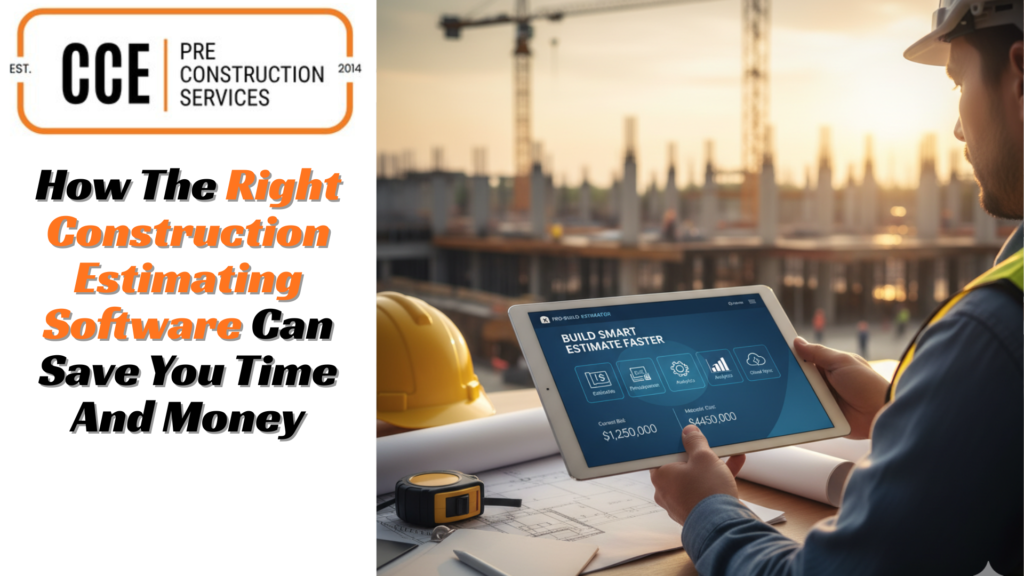
Now, the construction industry has entered a digital age and modern construction estimating software has completely changed how professionals plan, budget, and manage every stage of a project.
From a small home remodel in Texas to a commercial building in London or a new tower in Toronto, accurate estimation is now powered by smart technology. Companies like Construction Cost Estimation Service (C.C.E) use these tools to turn complex blueprints into reliable cost plans that keep projects on track from day one.
The Evolution Of Construction Estimating
Before software tools existed, estimators spent many hours counting materials and calculating costs. Mistakes were common, and projects often slowed down because of unclear numbers. As technology grew, construction cost estimation services began using digital tools that included live price data and material databases.
Today’s construction estimating services combine expert knowledge with intelligent software. This approach removes guesswork and helps builders, architects, and investors make smarter decisions. The shift from manual work to digital systems has made cost planning faster, more dependable, and more accurate than ever.
Why Accuracy Matters More Than Ever
Even a small error in estimating just 1% can cause major financial loss. For example, underestimating steel or concrete costs can delay the entire project and increase expenses.
That’s why professionals across the U.S., U.K., and Canada depend on construction cost estimation services that use the latest software. By combining expert judgment with digital precision, companies can forecast material costs, timelines, and labor budgets before work begins.
To explore this process in detail, visit construction estimates where each project is analyzed carefully to ensure every client stays within budget.
How Software Streamlines The Estimation Process
Modern construction estimating software does much more than calculate numbers. It helps manage design comparisons, cost breakdowns, and material changes all in one place. The software uses past project data and local market prices to deliver the most accurate cost forecasts.
For example, Xactimate Estimating Services: Accurate Solutions helps estimators generate digital takeoffs, update prices instantly, and create professional cost reports.This technology not only improves accuracy but also saves countless hours that were once spent doing manual calculations.
Time Efficiency: The Ultimate Advantage
Before digital tools, preparing an estimate for a medium-size project could take many days, sometimes even weeks. Now, with modern software, estimators can finish detailed reports in a matter of hours.
Imagine a developer who needs to submit a proposal overnight. Without digital estimating tools, that would be nearly impossible. But with automated systems, estimates can be prepared quickly, accurately, and with complete confidence.This speed gives companies a major advantage in today’s competitive market, helping them win more bids and complete more projects on time.
Cost Savings Through Accuracy And Integration
Accurate estimates don’t just prevent errors — they help save real money. When a project’s cost plan is correct, it avoids overbuying materials, reduces waste, and ensures labor hours are used efficiently.
Many builders now connect their estimating software with project management systems. This allows for live cost tracking throughout construction. The result? Fewer surprises, better budgeting, and complete transparency.
Additionally, services like Plans/Blueprints Drafting Services help estimators link drawings directly with cost models ensuring every line on a plan matches the project’s financial goals.
Human Expertise Still Matters
Even with advanced software, human experience remains vital. A tool can calculate quantities and prices, but only a skilled estimator can understand real-world challenges like weather, labor shortages, or site conditions.
At Construction Cost Estimation Service (C.C.E), experts use both field experience and the latest software to deliver accurate estimates for residential, commercial, and industrial projects. This blend of technology and experience ensures that clients receive precise, dependable results every time.
The Bigger Impact Of Smart Estimating
When a project begins with an accurate estimate, everything runs smoother — from budgeting and material delivery to workforce planning and payment schedules.
Accurate estimating builds trust between contractors, clients, and suppliers. It keeps everyone informed and ensures money is spent wisely. Over time, this reliability strengthens relationships and improves overall project success.
You can explore C.C.E’s service coverage via Google Maps to see how the company supports major cities and regions across the U.S., U.K., and Canada.
FAQs
1. What Is Construction Estimating Software?
It’s a digital tool that helps calculate project costs for materials, labor, and equipment. It makes planning faster and improves cost accuracy.
2. How Does Software Save Time During Estimation?
It automates repetitive work like material takeoffs and calculations, helping estimators create full reports in hours instead of days.
3. Can Small Contractors Benefit From Estimating Software?
Yes. Even small builders can improve accuracy, save time, and manage budgets more effectively using modern estimating tools.
4. What Makes Software-Based Estimating More Accurate?
These tools use updated cost databases, live price feeds, and digital takeoffs to reduce human error and reflect real-world pricing.
5. How Can I Choose The Right Software For My Business?
Look for scalability, easy integration, and good customer support. Tools like those used by C.C.E are ideal for both small firms and large contractors.