Long before digital software and automated workflows, contractors in the United States relied on manual quantity takeoffs measuring blueprints with rulers, calculators, and notepads. While effective in their time, these methods left room for errors that often caused cost overruns, schedule delays, and disputes.
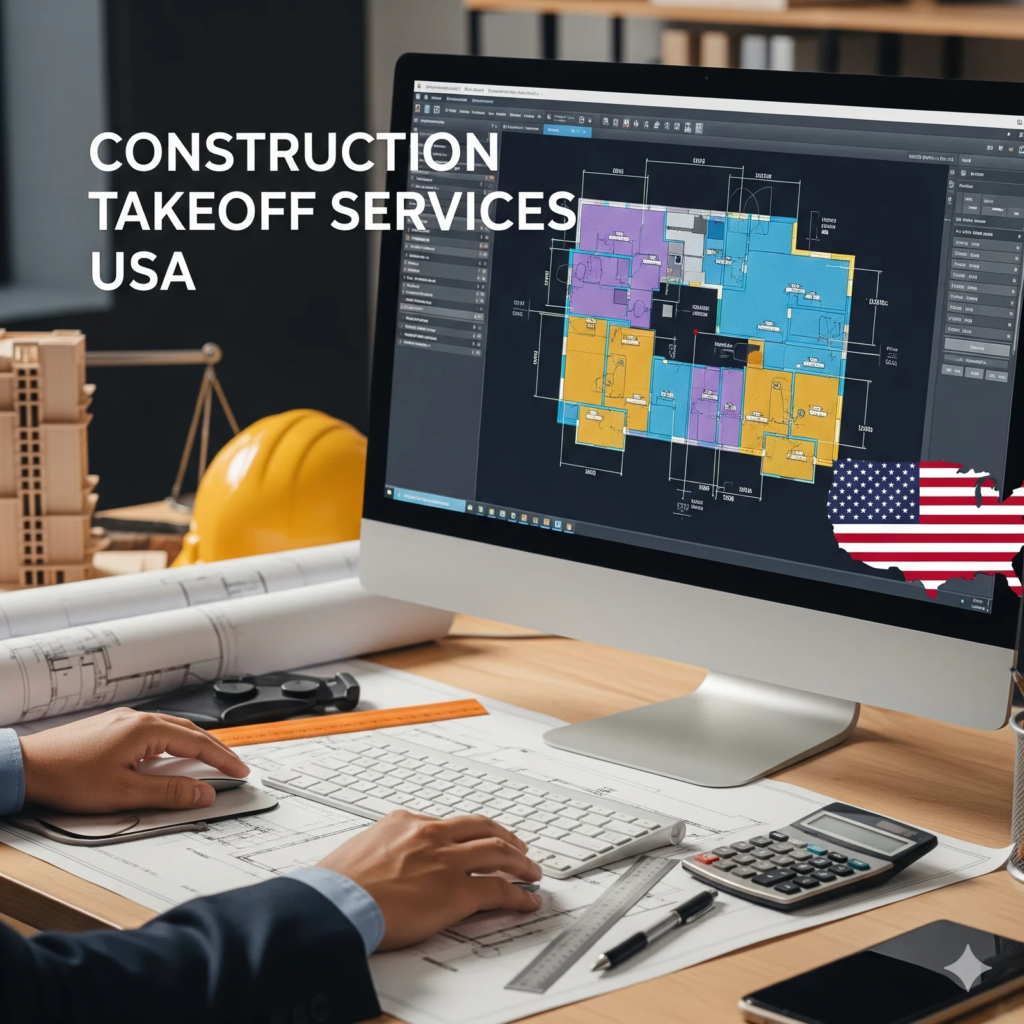
In today’s fast-paced industry, accuracy has become non-negotiable. That’s why contractors, developers, and project owners across the U.S. turn to professional Construction Estimating Services for Precise Project Planning. At the heart of this process lies Construction Takeoff Services, which serve as the foundation of every accurate project budget.
What Are Construction Takeoff Services?
Construction takeoff services involve the detailed measurement and quantification of every material required to complete a project. From cubic yards of concrete to linear feet of piping, takeoffs give contractors a clear view of quantities, costs, and labor requirements. In the United States, this service is critical not only for preparing competitive bids but also for controlling budgets during execution.
Unlike generic calculators or rough approximations, professional takeoff specialists combine field knowledge, advanced estimating software, and real-time U.S. market data to deliver precise results. These takeoffs support accurate Construction Estimating Service workflows, ensuring project owners can move forward with confidence.
Why Accurate Takeoffs Matter
In my years as a U.S.-based cost consultant, I’ve seen how poor takeoffs can derail even the most promising projects. A contractor who underestimates drywall quantities may win the bid but lose profitability. Similarly, an overstated steel takeoff can make a bid noncompetitive, costing the contractor potential business.
Accurate construction takeoffs help solve these issues by:
- Eliminating guesswork and manual errors.
- Aligning design intent with material needs.
- Providing reliable data for subcontractor bids.
- Reducing financial risks and disputes during construction.
For project owners, these services bring transparency and accountability to every dollar spent.
Workflow of Professional Takeoff Services
A professional estimator begins with digital blueprints and CAD files. Using industry software such as PlanSwift, Bluebeam Revu, or RSMeans, quantities are extracted for every division of work. Concrete, masonry, steel, carpentry, finishes, and MEP systems are carefully measured to ensure full coverage across CSI Divisions 01–34.
Each measurement is tied to current labor and material rates, as well as productivity factors and waste allowances. For example, during a commercial office build in Texas, digital takeoffs revealed an additional 12% waste factor in flooring due to design patterns. Accounting for this detail prevented costly mid-project change orders and gave the contractor a stronger competitive edge.
Residential vs. Commercial Takeoffs
Takeoff needs vary by project type. Residential projects often emphasize finishes, carpentry, and sitework, requiring attention to detail in labor productivity. Commercial and institutional projects—such as hospitals, schools, and retail centers—demand advanced coordination between multiple subcontractors, complex MEP systems, and strict code compliance.
This is why outsourcing to a specialized estimating firm provides value. Professionals who understand both small-scale and large-scale workflows can adjust takeoffs to reflect the realities of each project sector.
Role of Technology in Modern Takeoffs
The U.S. construction industry has embraced digital solutions to improve efficiency. Traditional manual methods are time-consuming and prone to oversight, while software-driven takeoffs integrate seamlessly with estimating and BIM workflows.
PlanSwift and Bluebeam Revu enable fast quantity extractions from PDFs and CAD drawings. RSMeans provides localized cost data for material and labor. Sage Estimating integrates takeoffs into full project cost forecasts. BIM models (Levels 0–3) take this further by linking 3D designs with real quantities and costs.
For contractors, these tools reduce turnaround times, improve bid accuracy, and increase profitability.
Integration with Estimating and Bidding
Takeoff services are not standalone. They directly support comprehensive estimating and bid preparation. For example, once quantities are extracted, estimators apply U.S. labor rates, subcontractor quotes, and productivity standards to prepare the final cost estimate. Many clients pair takeoff services with full estimating workflows, ensuring no gap between measurement and pricing.
Our firm integrates takeoff data with complete estimating deliverables, linking material quantities to real costs and schedules. This approach strengthens contractor bids and helps owners secure financing with confidence.
Applications Across U.S. Projects
Professional takeoff services are used across all sectors:
- Healthcare facilities require precise MEP and structural takeoffs to meet regulatory standards.
- Educational institutions rely on accurate sitework and finish takeoffs for timely funding approvals.
- Commercial developments such as offices and retail centers depend on steel, concrete, and mechanical takeoffs for competitive bids.
- Residential projects benefit from accurate carpentry, drywall, and finish takeoffs to control budgets.
In every case, the value is clear: detailed, accurate, and reliable data that reduces uncertainty and improves project delivery.
Why Choose Expert U.S.-Based Takeoff Services
Our services cover all CSI Divisions 01–34 with unmatched accuracy. Backed by decades of hands-on experience, our team delivers takeoffs that align with real construction practices, market prices, and productivity factors. By combining advanced digital workflows with expert judgment, we help contractors, developers, and owners across the U.S. achieve greater control, profitability, and project success.
FAQs on Construction Takeoff Services
1. What is the difference between construction takeoff and estimating?
Takeoff involves measuring and quantifying materials, while estimating applies pricing, labor, and overhead to create a full project cost.
2. Can construction takeoff services reduce project costs?
Yes. By preventing errors and accounting for waste, accurate takeoffs avoid budget overruns and unnecessary change orders.
3. Which software tools are best for U.S. construction takeoffs?
PlanSwift, Bluebeam Revu, RSMeans, and Sage Estimating are widely used for fast and precise results.
4. Are online construction estimator services reliable?
Generic calculators provide rough numbers, but professional takeoff specialists deliver data-driven, project-specific results with higher accuracy.
5. Why outsource takeoff services instead of doing them in-house?
Outsourcing saves time, reduces overhead, and provides access to U.S. experts who combine software skills with field experience.