If The Masonry Numbers Are Wrong, Cracks Don’t Just Show Up In Walls They Show Up In Your Profit.
Masonry looks solid when it is built, but financially it is very fragile. If your masonry estimate is short, labor hours explode, scaffolding stays longer, and material runs short right when you need to keep laying. If your masonry estimate is too high, your bid stops being competitive while your competitor wins the same job with more accurate quantities.
At Construction Cost Estimation Service (C.C.E), our Masonry Estimating Services are built for contractors, builders, and developers who are tired of guessing. We help you see the real cost of brick, block, stone, chimneys, veneers, and repairs before you submit a price across the USA, UK, and Canada, with special focus on Pearl states and cities and busy markets like NYC.
To give you a clear, measurable quantity breakdown that protects your bid, your budget, and your reputation.
Our masonry estimating services do more than multiply wall area by a unit rate. We take your drawings and break the masonry scope into real, buildable pieces: walls,piers, columns, chimneys, veneers, parapets, and openings. We count units, mortar, grout, rebar (for concrete masonry unit rebar estimating and detailing), ties, anchors, and accessories. We also factor in labor productivity, access conditions, lifts, and height, because masonry on the ground does not cost the same as masonry at the top of a scaffold. The result is a clear, defensible cost picture, not just a wall area divided by an average rate.
Here we use the first table so the user gets a clear visual view of what we look at and how we structure the estimate.
Masonry Scope Area | What We Measure | What You Receive |
Brick Veneer & Facing | Wall area, coursing, joint thickness, openings, lintels. | Brick counts, mortar volumes, accessory items, install labor. |
Concrete Masonry Units (CMU) | Block size, wall length/height, cells, reinforcement. | Block counts, grout, rebar, bond beams, labor, and equipment. |
Stone Masonry (Exterior) | Pattern, thickness, backing, waste factor. | Stone quantities, setting mortar, backup material assumptions. |
Chimneys & Fireplaces | Flue size, height, lining, access, detailing. | Units, liners, masonry heater cost factors, labor hours. |
Repair & Restoration | Demo, rebuild, patching, tuckpointing, access. | Clear breakdown of repair quantities and realistic labor times. |
This structure helps you see exactly where costs are coming from instead of trusting a single “masonry rate” that hides risk inside it.

We support masonry estimating services in the USA, the UK, and Canada for residential, commercial, and industrial projects. From small local contractors in Georgia to larger firms pricing multiple bids in NYC, we adapt to your region’s rates and working style. In the USA, we often work with clients needing Georgia masonry estimating services, masonry estimate services NYC, and other state-specific support. We understand that labor cost, productivity, and material pricing change with location and union conditions. So, we never copy one region’s assumptions into another region’s estimate.
Many people ask, “What factors affect the costs of labor when estimating masonry?”
In reality, labor cost is controlled by more than just the hourly rate. Work height, layout complexity, weather, crew skill, access, and material staging all change how many units can be laid in a day. If these factors are ignored, your masonry work cost per hour may look fine on paper but fail badly on site. When we estimate, we look at wall height, system type, repeats vs. one-off details, and site logistics so your labor assumptions match real productivity.
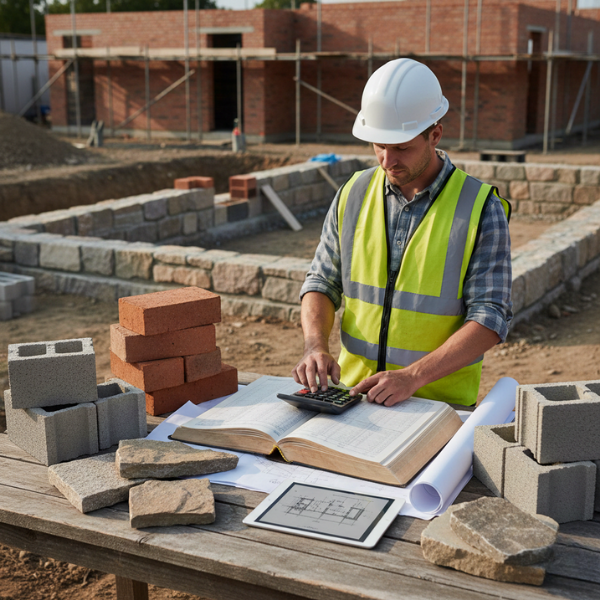
The good masonry cost estimator does not treat every wall as identical. Brick veneer on a simple straight wall is not the same as brick around windows, doors, and architectural features. CMU back-up walls with rebar and grout have very different costs from non-structural partitions. Stone cladding demands extra time for sorting, fitting, and cutting and this must be reflected in both labor and waste factors. Our estimates capture these differences so you can price each type of masonry correctly instead of averaging everything into one risky number.
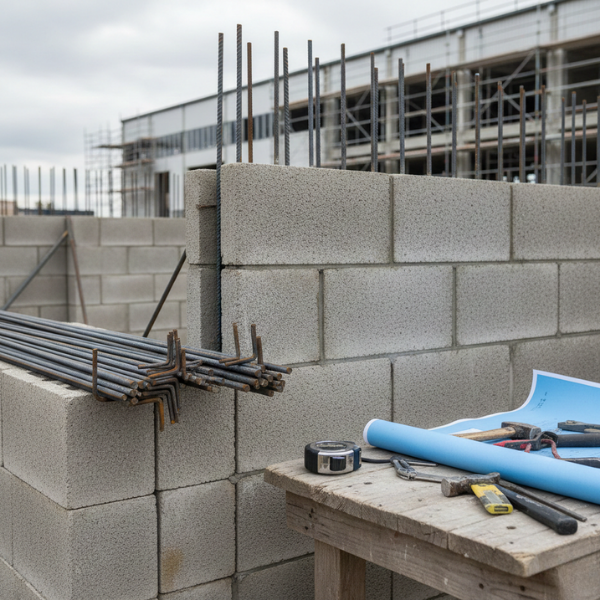
For structural work, concrete masonry unit rebar estimating and detailing services are critical. We do not just count blocks; we also map reinforcement patterns, grout cells, bond beams, and lintels according to the engineer’s design. This helps you order the right rebar lengths and sizes, plan pours for grout, and understand how many passes will be needed.
By integrating CMU, rebar, and grout into one estimate, we reduce the chance that structural costs are underestimated. This is particularly important for load-bearing walls, retaining walls, and high seismic or wind-load areas.
Markets like NYC behave differently. Access is tight, scaffolding costs more, inspections are strict, and mistakes are expensive. Our masonry cost estimation NYC support looks carefully at building height, staging areas, hoist or crane use, and sequencing.
We also align with local labor rates and typical crew setups, so the estimate reflects real conditions. The goal is simple: when you submit a price in a high-cost city, you know it is grounded in that city’s realities, not in a suburban assumption.
Repairs can be more unpredictable than new work. Chimney masonry repair cost, chimney masonry repairs with aluminum liner estimate costs in NJ, tuckpointing, and partial rebuilds all require careful evaluation of access and existing conditions. We look at demolition, safe removal, protection of adjacent surfaces, and rebuild time. For chimneys and fireplaces, we also factor in liner costs, masonry heater cost components, and any special flue or cap details. Even if the job is small, a rushed estimate can lead to hours of unpaid work and lost profit.
People often search “how to estimate masonry costs” and get lost in formulas.
Our approach is simple:
This step-by-step method turns “how much does masonry cost” into a clear, traceable answer instead of a guess.
Here we use the second table so users can quickly see what type of masonry work we support and why estimating precision is critical.
Masonry Type | Typical Use Cases | Why Accurate Estimating Matters |
Brick Masonry | Facades, veneers, feature walls, chimneys. | Pattern complexity and opening details can heavily impact labor. |
Concrete Masonry Units (CMU) | Structural walls, basements, retaining walls. | Rebar, grout, and bond beams add major cost if not measured right. |
Stone Masonry | Exterior cladding, landscape walls, accents. | High waste and hand-fitting time must be priced correctly. |
Repair & Restoration | Chimneys, cracks, repointing, partial wall rebuilds. | Unclear scope and access issues can destroy profit if underpriced. |
This makes it easy to see that whether the work is small chimney repair or large CMU structure, masonry estimating is a core risk control tool not a minor task.
Masonry rarely exists alone. Exterior masonry walls often connect directly to cladding, stucco, or exterior finishes, and interior walls connect to plaster, drywall, or tile. If masonry and finishes are estimated without coordination, costs can overlap or leave gaps. That is why we recommend pairing our Masonry Estimating Services with our specialized Interior & Exterior Finishes Estimating Services. This way, you see the combined cost of walls plus finishes, and you avoid “I thought that was in your scope” disputes between trades.
We support masonry work across multiple sectors: residential homes, multifamily buildings, commercial plazas, schools, healthcare, warehouses, and more. Each sector has a different approach to durability, fire rating, aesthetics, and budget. We align our assumptions (such as unit type, reinforcement level, and finish quality) with the industry requirements. This makes our masonry estimates practical whether you are building a small home addition or a large institutional facility.
In masonry, mistakes are heavy literally and financially. Wrong quantities mean wasted blocks, rushed orders, or crews waiting for materials. Wrong labor assumptions mean long days, unpaid overtime, and a job that “looked fine on paper” but failed in reality. By using Construction Cost Estimation Service (C.C.E), you get masonry estimates that are detailed, explainable, and built from both drawings and real-world experience. You stay competitive on bid day without selling your profit away.
Masonry estimating services include a full breakdown of all masonry elements shown on your plans brick, block, stone, chimneys, veneers, and repairs. We measure wall areas, count units, and calculate mortar, grout, rebar, ties, and accessories. We also add realistic labor hours, equipment usage, and access factors. The result is not just a total cost, but a line-by-line view of how that cost was built, so you can review, adjust, and defend the number with confidence.
To estimate masonry costs, we first separate the scope into clear sections such as exterior walls, interior partitions, structural CMU, stone facades, and chimneys. For each section, we measure length, height, and openings from the drawings. We then convert areas into unit quantities based on the type and size of masonry being used. After that, we add mortar, grout, reinforcement, and accessories, and we apply labor rates and crew productivity based on height, complexity, and access. This layered method answers “how to estimate masonry costs” in a way that matches how the job will actually be built.
Several practical factors change the labor cost when estimating masonry. Wall height affects how much time is spent moving materials on scaffolding or lifts. Complex patterns, many openings, and detailed corners slow production compared to simple, straight runs. Weather, site congestion, and material staging can also reduce productivity. When we estimate labor for masonry, we consider these variables instead of assuming a single flat rate. This makes your masonry work cost per hour much closer to real field performance.
For exterior stone masonry, we look at the stone type, thickness, pattern, and backing system. Stone has higher waste than brick or block because pieces must be cut and fitted. We measure area, consider joints, and apply a waste factor that matches the stone style. Labor is adjusted upward for sorting, cutting, and handling heavier units. Anchors, ties, and support systems are also included. This approach turns the question “how to estimate exterior stone masonry cost” into a structured calculation instead of a rough guess.
Yes, we regularly estimate chimney masonry repair cost and chimney rebuilds, including cases with aluminum liners and flue upgrades. We look at existing height, damage extent, access difficulty, demolition effort, and any required structural stabilization. We then add costs for new masonry units, liners, caps, flashing interfaces, and labor to safely perform the repair. This is especially valuable in regions like NJ and NYC where chimney masonry repairs with aluminum liner estimate costs can vary widely from job to job.
The concrete masonry wall cost estimator starts by measuring the length and height of the wall and subtracting openings. We choose the block size and type, then calculate the number of units needed. We add grout and rebar quantities based on engineering details, including bond beams and filled cells. Mortar, ties, and accessories are added on top. Finally, we apply labor productivity rates appropriate to wall thickness, height, and site conditions. This gives you a realistic cost per wall, not just an average number per square foot.
Yes, we offer tailored masonry estimating services in the USA, including focused support such as Georgia masonry estimating services and masonry estimate services NYC. For each location, we adjust labor rates, productivity assumptions, material costs, and typical scaffolding or equipment needs. High-cost urban markets require different assumptions than suburban or rural projects, and we respect those differences. That way, your masonry cost estimation reflects the area where you actually build, not a generic national average.
Masonry repair cost is handled differently from new construction because working on existing structures is rarely straightforward. We factor in demolition, protection of adjacent finishes, limited access, and irregular layouts. Small repair volumes can still require full setup of scaffolding or lifts, which adds cost. For new construction, we can assume smoother workflows and better staging. We clearly separate repair and new work items in the estimate so you can see how each portion affects the final price.
Masonry often supports or receives finishes such as plaster, stucco, siding, paint, or tile. If masonry and finishes are priced separately without coordination, some tasks may be included twice or not at all. By aligning masonry estimates with our Interior & Exterior Finishes Estimating Services, we create a joined view of wall assemblies. This helps avoid gaps in scope, clarifies responsibilities between trades, and gives owners a more accurate total project cost.
You can estimate masonry on your own, but it takes time, focus, and experience to capture all the details while juggling active projects. A professional service like Construction Cost Estimation Service (C.C.E) brings dedicated attention, proven methods, and exposure to many different masonry designs. We reduce the risk of undercounted units, forgotten accessories, and unrealistic labor assumptions. For you, that means more accurate bids, fewer surprises during construction, and a better chance to protect your margin on every masonry job.
OUR SERVICES
Contact us today to get started on your construction projects and experience the difference of working with Construct Estimates.
Get notified about new articles