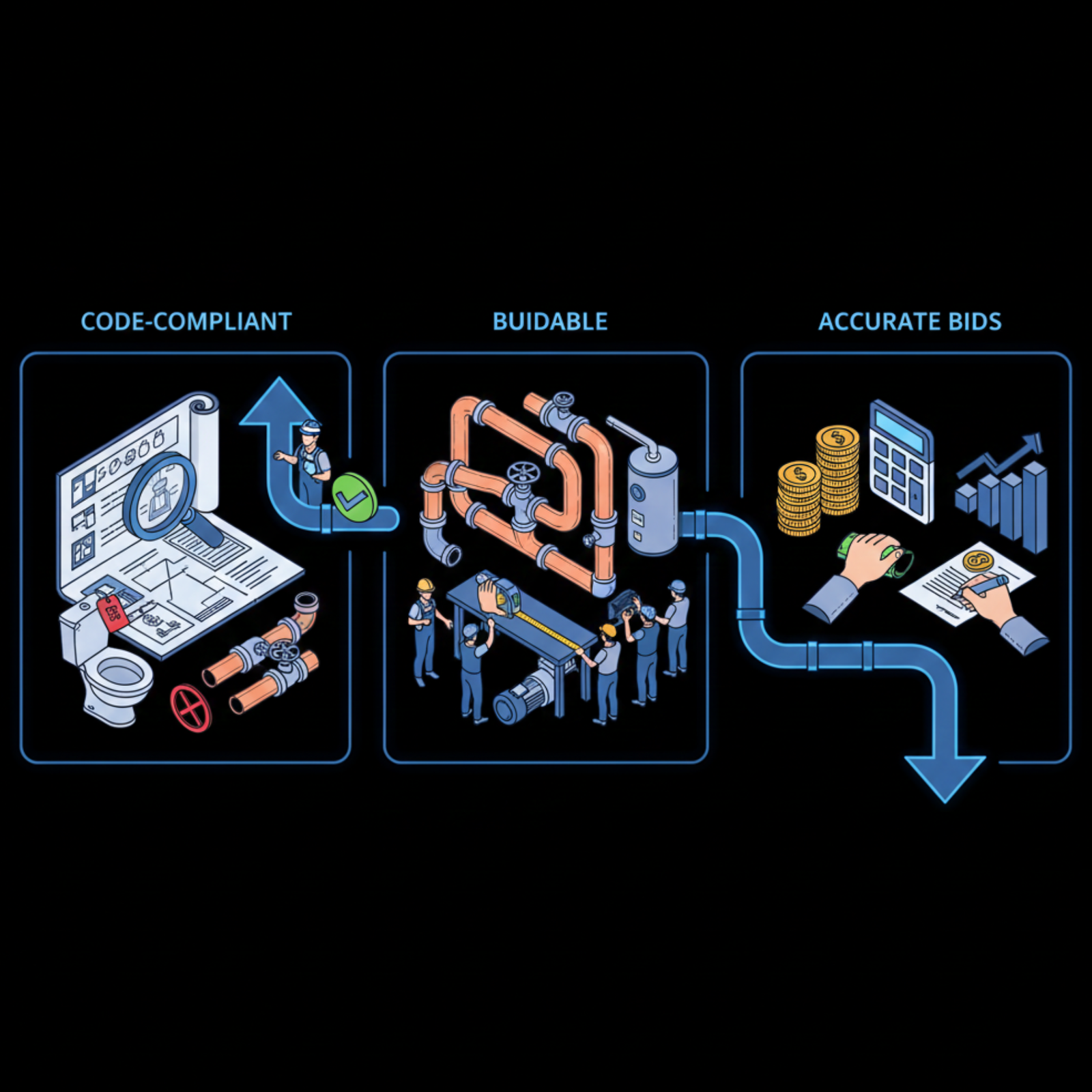
Mechanical costs are where projects quietly lose control. HVAC systems, piping layouts, equipment selections, labor hours, and coordination gaps can push a project over budget long before construction starts.
That is why professional Mechanical Estimating Services are not optional anymore. They are a requirement if you want predictable costs, clean bids, and fewer surprises. At Construction Cost Estimation Service (C.C.E), we prepare detailed mechanical cost estimates that contractors, developers, and owners can actually rely on. Our estimates are built from real quantities, real labor productivity, and current market pricing across the USA, UK, and Canada.
This page explains how mechanical estimating works, what affects cost, and how accurate estimates protect your project at every stage.
To give you a clear, measurable quantity breakdown that protects your bid, your budget, and your reputation.
Mechanical estimating is not the same thing as a simple mechanic repair estimate. In construction, mechanical estimating focuses on all building systems that control air, water, heating, cooling, and energy flow inside a structure.
Mechanical estimating services cover HVAC systems, mechanical piping, ductwork, equipment installation, insulation, supports, testing, and commissioning. Every fitting, valve, hanger, and labor hour must be accounted for before a bid is submitted. This process is part of professional construction cost estimation services, where mechanical scope often represents one of the largest and riskiest cost packages.
Mechanical work changes fast. Design revisions, equipment substitutions, and site conditions can affect cost immediately. Without a structured estimate, contractors rely on assumptions that rarely match reality.
Labor productivity, access limitations, ceiling heights, coordination with electrical and plumbing trades, and local wage rates all influence final numbers. A mechanical cost estimator looks beyond drawings and evaluates how the work will actually be built. That is why mechanical estimating services save money before construction even starts.
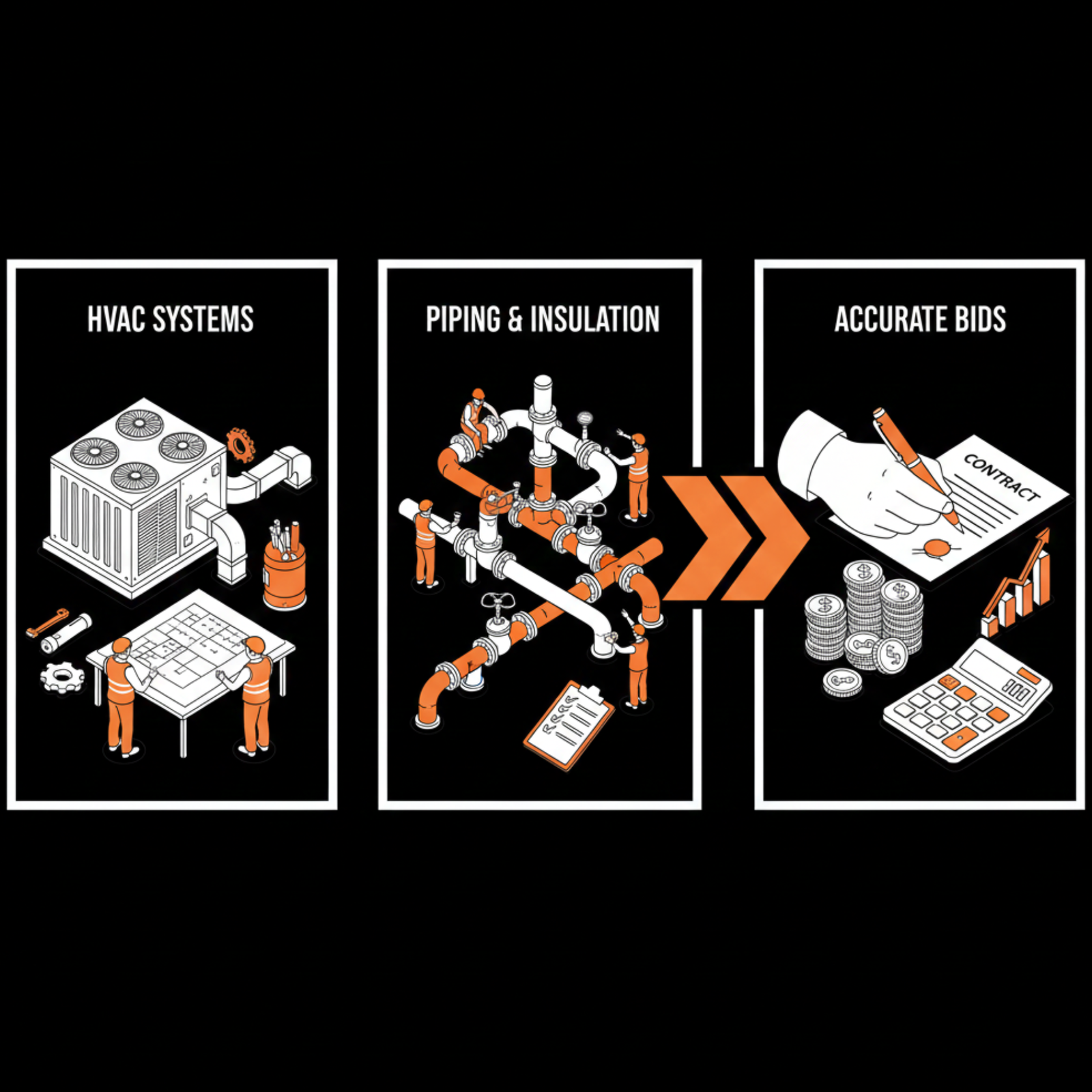
Our mechanical estimating services are built for real projects, not templates. We handle interior mechanical estimating for residential, commercial, industrial, and institutional buildings.
We prepare estimates for new construction, renovations, tenant improvements, and value engineering reviews. Our team works directly from drawings, specifications, and addenda to produce clean, defensible numbers. Mechanical estimating software is used as a tool, not a shortcut. Every estimate is reviewed by experienced estim
Mechanical labor cost is one of the biggest variables in any estimate. Labor depends on system complexity, crew size, union or non-union rates, and site constraints. Equipment pricing adds another layer of risk. HVAC units, chillers, boilers, and air handlers fluctuate based on manufacturer availability and lead times. A professional mechanical estimate reflects current market conditions instead of outdated averages. This is where many contractors underestimate and lose margin.
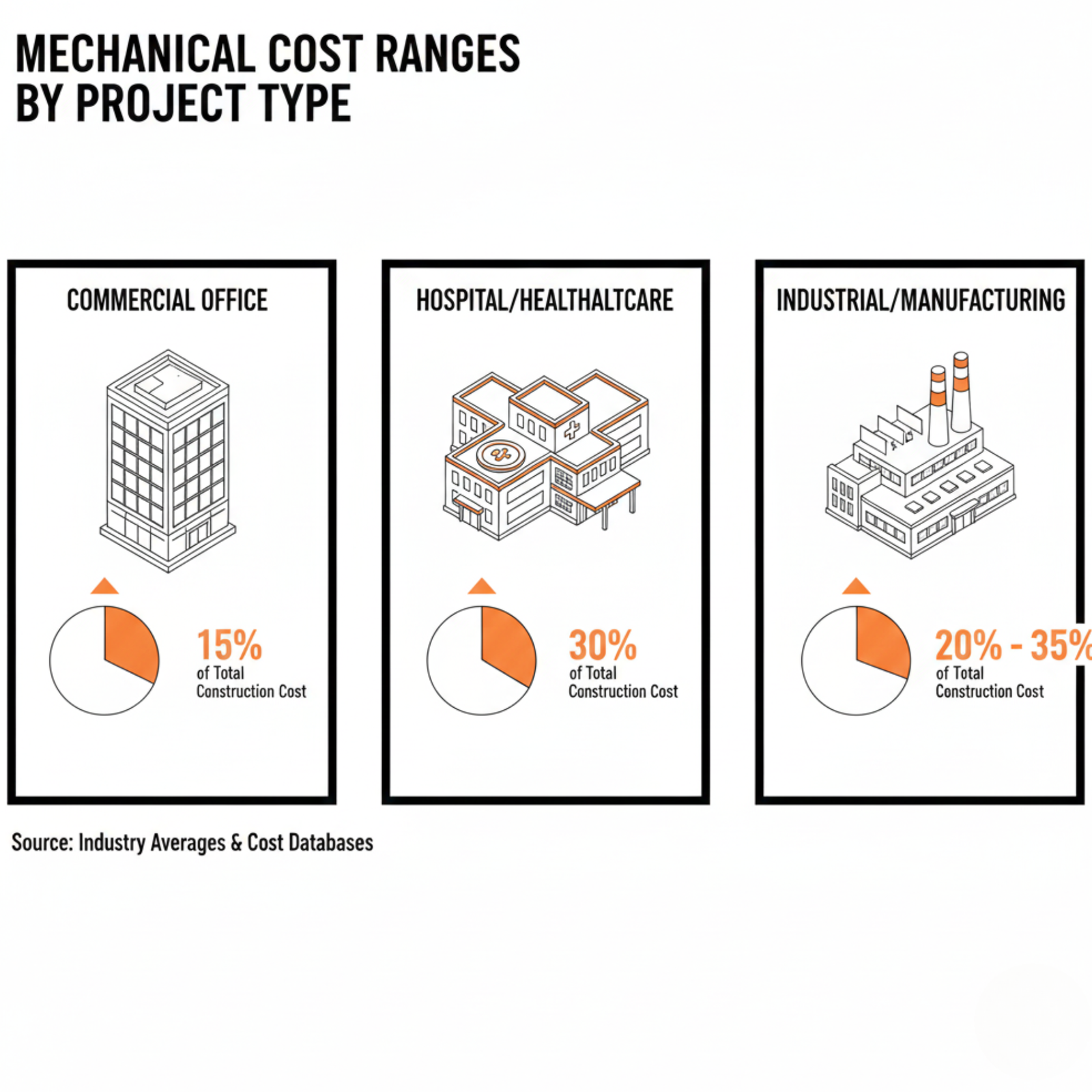
The table below shows typical mechanical cost ranges per square foot. These are not bid prices. They are planning-level insights used during early budgeting.
Project Type | Typical Mechanical Cost Per Sq Ft |
Residential Low-Rise | $8 – $18 |
Residential High-Rise | $15 – $30 |
Commercial Office | $12 – $28 |
Healthcare Facilities | $25 – $60 |
Industrial Buildings | $18 – $45 |
Actual cost depends on design, location, and system complexity. Our mechanical estimating services refine these ranges into precise project-specific numbers.
Interior mechanical estimating focuses on everything inside the building envelope. This includes ductwork, mechanical piping, terminal units, controls, and equipment connections.
We quantify materials down to fittings and accessories so contractors know exactly what they are pricing. This level of detail supports clean bids, accurate procurement, and better scheduling.Interior mechanical estimates are especially critical for tenant fit-outs and fast-track projects.
Mechanical estimating software helps organize quantities, assemblies, and labor factors. However, software alone does not produce an accurate estimate.Our estimators validate software outputs using experience from real projects. We adjust labor units based on ceiling congestion, installation height, and coordination challenges. This approach prevents the common mistake of trusting default values that do not match jobsite reality.
Many people search for mechanic repair estimates or mechanic estimate templates. Those apply to vehicle repair and small equipment servicing.
Mechanical estimating services in construction are completely different. They deal with building systems, long installation durations, and coordination with multiple trades.
Questions like “can a mechanic charge for an estimate” or “do mechanics give free estimates” apply to auto repair shops, not construction estimating. In construction, professional estimates are paid services because they protect millions in project costs.
A detailed mechanical estimate sets clear expectations. When quantities, labor, and scope are defined upfront, disputes during construction decrease significantly.
Contractors can defend change orders, owners understand cost drivers, and project teams communicate better. This is one of the biggest hidden benefits of professional mechanical estimating.
Mechanical codes, labor rates, and material pricing vary by region. Our estimating process adjusts for regional standards in the USA, United Kingdom, and Canada.
We account for local labor laws, productivity norms, and supplier pricing so estimates stay realistic across different markets.
This regional awareness is essential for national contractors and international developers.
Mechanical systems do not exist alone. They interact constantly with electrical and plumbing scopes.For coordinated estimates, we often align mechanical pricing with related services such as Plumbing Estimating Services to avoid overlaps and gaps. This coordination helps contractors submit balanced bids and avoid trade conflicts later.
A mechanical cost estimator reviews drawings, interprets specifications, measures quantities, applies labor units, and validates pricing. They also identify missing scope, design risks, and constructability concerns. This role is part of cost estimation in mechanical engineering and requires both technical knowledge and field experience. Good estimators think like builders, not just calculators.
The table below shows a simplified mechanical cost breakdown for a mid-size commercial project.
Cost Component | Typical Share Of Mechanical Budget |
HVAC Equipment | 35% |
Ductwork & Piping | 30% |
Labor | 25% |
Testing & Commissioning | 5% |
Contingency | 5% |
Actual distributions vary by project type and design intent.
Mechanical estimating cost depends on project size, complexity, and level of detail required. Smaller residential projects may cost a few hundred dollars, while large commercial estimates require more time and analysis. The cost of estimating is always far lower than the risk of bidding blind.
Mechanical cost per square foot varies by building type and system design. Residential projects typically range lower, while hospitals and industrial buildings cost significantly more due to complex systems and redundancy requirements.
Mechanical estimating focuses on HVAC and mechanical piping systems. MEP estimating includes mechanical, electrical, and plumbing together. Mechanical estimating is often performed separately to ensure depth and accuracy.
No. Mechanical estimating software supports the process but cannot interpret drawings, site conditions, or coordination challenges. Human judgment is required for accurate estimates.
Mechanical labor cost is estimated using productivity rates adjusted for access, congestion, system type, and regional wage data. Experience plays a major role in getting this right.
Yes. Even small residential projects benefit from mechanical estimates, especially when HVAC systems are upgraded or redesigned. It prevents underpricing and changes orders.
Construction drawings, specifications, equipment schedules, and any addenda are required. More complete documents lead to more accurate estimates.
Turnaround time depends on project size. Small projects may take a few days, while complex commercial estimates require more detailed review.
Yes. We often provide cost-saving alternatives that maintain performance while reducing budget pressure.
Outsourcing saves time, reduces overhead, and provides access to experienced estimators without hiring full-time staff. It also improves bid accuracy and win rates.
OUR SERVICES
Contact us today to get started on your construction projects and experience the difference of working with Construct Estimates.
Get notified about new articles